
However, jewelry retailers face a unique set of design challenges. Products are small, security is non-negotiable, and purchases are often driven by personal consultation. Collections change with the seasons, and the space must immediately convey a sense of quality and permanence. This guide offers practical ideas for creating a jewelry store that solves these challenges, focusing on layout, displays, lighting, branding, and operational efficiency.
Key Takeaways
- A successful layout integrates customer flow, product visibility, and consultation zones into a single, cohesive plan.
- Lighting, materials, and display fixtures must be chosen to enhance the jewelry’s specific color, brilliance, and scale.
- Secure, modular fixtures allow retailers to refresh collections and support seasonal merchandising without costly renovations.
- The best store concepts balance visual impact with accessibility, operational needs, maintenance, and budget.
Create a Jewelry Store Layout That Guides Customers
A strong layout guides shoppers from first glance to purchase. It keeps the floor open and welcoming, then reveals products in stages so customers keep moving deeper into the store.
Design a Welcoming Entrance
The first impression is critical. Your entrance should offer an immediate, inviting view into the store without overwhelming visitors.
- Keep sightlines open so shoppers see a clear path and a focal point—a branded wall or featured collection—without tall fixtures blocking the entry
- Leave room to enter, pause, and get oriented so the doorway never feels crowded
- Tease collections instead of showing everything at once, so shoppers move farther in to discover more
Divide the Space into Purposeful Zones
Zoning makes the assortment easier to navigate. Define each area with design shifts—not only signs—and plan for:
- Brand introduction near the entrance to set the story
- Featured collections in a high-visibility spot for new arrivals or signature lines
- Everyday jewelry on accessible displays for casual, self-service browsing
- Bridal and fine jewelry in quieter, seated areas for high-consideration buys
- Watches in dedicated cases built for their display needs
- Consultation and checkout in comfortable, semi-private service spaces
- Repairs and service at a discrete counter for intake and pickup
Guide traffic between zones with changes in flooring, ceiling height, or focused lighting so the path through the store feels natural.
Design for Private and Comfortable Consultations
For significant purchases like engagement rings, customers need a calm, private space. A consultation area should be more than just a counter.
- Seat the customer and their companions in comfortable chairs
- Size the counter for easy tray viewing and side-by-side comparison of several pieces
- Place mirrors so shoppers can check the jewelry on themselves from multiple angles
- Protect privacy while keeping staff sightlines to the floor and discreet access to secure storage
Optimize Small or Irregular Footprints
Not every store has a large, open floor plan. For smaller or oddly shaped spaces, smart layout choices are essential.
- Push displays to the perimeter with wall-mounted systems and continuous casework so the center stays open
- Use glass, open shelving, and low-profile fixtures to keep sightlines clear and the room from feeling cramped
- Add movable pedestals or nesting tables you can reconfigure for events or new collections
In a long, narrow footprint, a gallery layout works well: secure built-in cases for fine jewelry on one wall, a flexible track system for fashion on the other, a seated consultation nook at the back, and the cash wrap near the front for security and service.

Before you build, validate the plan with a scaled floor plan or 3D visualization. CUBIC can produce space renderings that test circulation, accessibility, staff movement, and sightlines to high-value merchandise so the layout works on the floor—not only on paper.
Combine Displays, Lighting, and Security
In a jewelry store, fixtures, lighting, and security work best as one integrated system. Designed together, they protect high-value inventory and make every piece look its best.
Select the Right Display Fixtures
The fixtures you choose should align with your product type, brand aesthetic, and operational needs. A layered approach works best.
- Display cases: the primary workhorse for valuable items—choose anti-reflective glass and integrated, color-accurate lighting
- Wall systems: modular track or point-based setups for necklaces, bracelets, and fashion jewelry
- Pedestals and niches: elevate hero products and create visual focal points
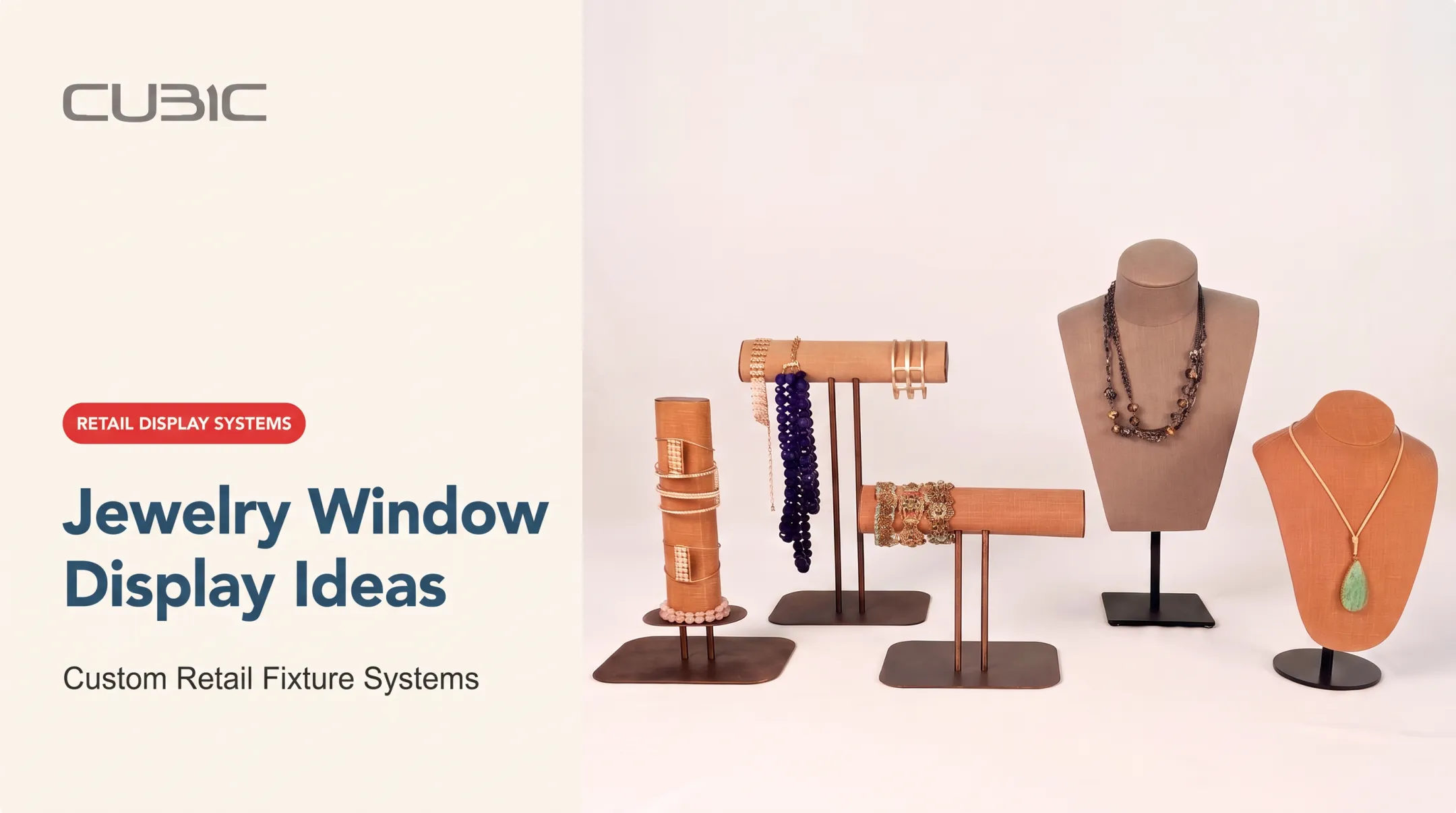
- Tabletop displays: busts, ring and bracelet stands, and custom trays that keep case presentations shoppable
For example, a modular tabletop system like CUBIC's Boutiqx uses adjustable uprights and interchangeable accessories, allowing merchandisers to reconfigure displays for new collections without replacing the full fixture.
Develop a Layered Lighting Plan
Lighting is the most important design element in a jewelry store. Get it wrong, and diamonds look dull and metals look off-color; get it right, and the pieces sparkle.
- Ambient lighting: general light that fills the space and keeps it comfortable
- Accent lighting: focused, directional light on key displays—about three times brighter than ambient is a common target
- Integrated case lighting: linear LED strips or small spotlights built into cases so jewelry pops
- Decorative lighting: chandeliers or sculptural pendants that support brand aesthetic, not primary product illumination
For jewelry, look for lighting with a high Color Rendering Index (CRI) of 95 or above to ensure gemstone and metal colors look true to life. According to a 2024 guide from lighting specialist Tecolite, a color temperature between 4000K and 5000K is often preferred for diamonds. Also control glare and reflections on glass cases.

Integrate Security from Day One
Build security into the floor plan and fixture specs before finish selections lock in.
- Secure cases: keep high-value merchandise in locked cases with reinforced locks; never leave product unattended on countertops
- Visible deterrents: mount cameras at eye level, and follow Jewelers' Security Alliance (JSA) guidance to cover activity outside the store as well
- Unobstructed sightlines: give staff clear views across the sales floor and to the entrance; avoid tall fixtures that create blind spots
- Smart checkout design: place the counter so staff can greet customers and still monitor the exit
Choose Fixtures Built for Flexibility
Collections rotate and seasonal campaigns change the floor set. Modular components, adjustable shelves, and interchangeable display pads let your team refresh the look without a full renovation. CUBIC builds modular and custom jewelry display hardware so brand-specific layouts stay flexible after install.
Build a Distinctive Brand Experience
Anyone can fill a room with glass boxes. A truly successful jewelry store uses design to tell a unique brand story that resonates with its target customer. The goal is to create an environment that feels authentic to your brand's position in the market, since generic "luxury" cues alone won't achieve that.
Define Your Design Language
Your store's aesthetic should be a direct reflection of your brand identity. Are you contemporary and minimalist, or do you have a rich heritage story to tell?
- Contemporary Minimalism: Clean lines, neutral colors (like the lighter palettes noted as a 2024 trend by National Jeweler), and a focus on uncluttered displays.
- Heritage Luxury: Rich woods, classic details, and a sense of permanence and tradition.
- Warm & Artisanal: Natural materials, handcrafted textures, and a welcoming, workshop-like feel.
- Modern Bridal: Soft curves, romantic colors, and intimate consultation areas, as seen in CUBIC's champagne-gold displays for bridal brand VOW'D.
Use a Controlled Palette of Materials
Texture and contrast bring a space to life. However, in a jewelry store, the materials should support the product, not overpower it. Select a controlled palette of 3-5 primary materials, such as wood, stone, metal, plaster, or fabric, and use them consistently to create a cohesive and sophisticated environment. This focused approach keeps the jewelry as the clear visual focus of the space.
Create a Memorable Focal Point
A distinctive feature can make your store memorable and draw customers in. This could be:
- A feature wall with a custom finish or illuminated logo.
- A sculptural central display fixture.
- An artful storefront or entryway.
- A signature ceiling element that draws the eye upward.
This focal point should reinforce your brand identity and complement the merchandise. For instance, a custom-fabricated element like CUBIC's Wood Lattice System can create an architectural feature wall that also functions as a flexible merchandising display.
Don't Forget Customer Comfort
High-consideration purchases take time. The environment should be calm, comfortable, and accommodating. Small details make a big difference: thoughtfully placed seating, full-length mirrors, offering refreshments, and ensuring consultation spaces feel private and unhurried.
Make the Store Flexible, Accessible, and Operationally Practical
A beautiful store that is hard to work in—or hard for customers to navigate—is a failed design. Plan for flexibility, accessibility, and day-to-day operations from the start so the space works as well as it looks.
Plan for Flexibility and Change
Your store needs to adapt to new collections, seasonal campaigns, and special events. Building flexibility into the design from the start saves money and effort down the line.
- Modular fixtures with interchangeable components that staff can reconfigure between collections
- Freestanding pedestals, nesting tables, or casters-based displays that shift the floor plan without construction
- Track or point-based wall systems so shelf heights, hooks, and signage change without tools—the same modular hardware approach used in flexible jewelry merchandising setups
Ensure Accessibility for All Customers
Creating an inclusive environment is both a legal requirement and good business. Adhering to the 2010 ADA Standards for Accessible Design is the minimum.
- Main circulation paths at least 36 inches wide
- At least one of each counter type at a maximum height of 36 inches
- Display cases and merchandising between 15 and 48 inches from the floor for seated viewing
- Clear space in consultation areas and near mirrors for customers using mobility devices

Design for Back-of-House Functionality
A smooth customer experience depends on efficient behind-the-scenes operations. Plan for:
- Secure, organized stock storage
- A dedicated packaging and gift-wrapping station
- Easy access to clean glass cases and polished surfaces
- Enough electrical outlets for lighting, tools, and technology
- A clear path for repair intake and tracking
Plan the Project, Budget, and Rollout
A jewelry store build-out succeeds when the plan, budget, and sequence account for premium casework, layered lighting, and security—not just basic retail construction. Phasing the work keeps costs in check from concept through opening day.
Categorize Your Budget
Break the budget into major categories so nothing critical gets buried in a single lump sum. Typical line items include:
- Design and professional fees (architect, designer)
- Construction and general contracting
- Fixtures and casework
- Lighting package
- Security systems and technology
- Signage and graphics
- Furniture (seating, tables)
- Shipping and installation
- Contingency (10–15% for unexpected issues)
A 2026 guide from Cushman & Wakefield puts the average U.S. cost for a standard in-line retail fit-out at $157 per square foot. Treat that figure as a basic-construction benchmark only—it does not cover the custom casework, high-security systems, and specialized lighting a jewelry store requires.
Prioritize Spending
When the budget is tight, put money first where it protects product and shapes the customer experience:
- High-quality, secure display cases for product presentation
- A professional, layered lighting plan
- A full security system that protects assets and people
- Durable, attractive finishes on counters and seating
Outline a Practical Project Sequence
Keep the project on track with a clear sequence:
- Research & strategy — define brand, customer, and goals
- Concept design — lock the overall look and feel
- Layout & fixture planning — detail floor plans and choose display systems
- Engineering & prototyping — finalize fixtures for manufacturing
- Fabrication & construction — build fixtures and prep the site
- Installation — set fixtures, lighting, and security
- Merchandising — stock displays and prep for opening
Multi-location retailers benefit from a repeatable fixture package and documented rollout standards so every store stays on brand. CUBIC can coordinate that path end to end—design, manufacturing, logistics, and store rollout support—so new locations open with a consistent fixture package and timeline.
Frequently Asked Questions
How much does it cost to set up a jewelry shop?
Costs range from a few thousand dollars for a simple refresh to hundreds of thousands for a full build-out, depending on location, size, and scope. Budget for fixtures, lighting, security, construction, and professional fees to get a realistic estimate.
What is the best layout for a jewelry shop?
The best layout features a welcoming entrance, clear circulation paths, and logical product zones for different categories. It includes secure displays, comfortable consultation seating, and allows for efficient staff movement, all tailored to your specific footprint and merchandise.
How do you display jewelry in a shop?
Display jewelry by category in uncluttered cases with focused, high-quality lighting. Use varied display heights with busts, stands, and trays to create visual interest and provide enough space for customers to easily see and compare pieces.
What are some unique design ideas for jewelry shops?
Consider a signature material palette, a branded feature wall, or themed zones for different collections. Other ideas include using sculptural fixtures, interactive digital storytelling, distinctive storefront window displays, or creating a highly photogenic consultation area.
How do you attract customers to a jewelry shop?
A compelling storefront and a welcoming entrance are key. Inside, a clear brand story, memorable displays, and a comfortable, high-service environment will keep them engaged. Ensure your online presence and in-store experience are consistent.
What is the 2:1:1 rule for jewelry?
This rule is more often about personal styling (two delicate pieces, one medium, one statement) than store design. For retail lighting, the 3:1 accent-to-ambient ratio is the more useful technical guideline.